
Why Chalcopyrite Is Traded in the International Market
Published on October 14, 2025, at 00:34 - Updated November 21, 2025 - By Commodity Research Unit - Mining sector
Starting point
Chalcopyrite is a strategic product in the international trade. Its market behaviour explains why it is traded in formats such as in bulk, raw, wholesale, granulated, per ton. Save this page: it is your quick report of Chalcopyrite in 2026.
Chalcopyrite: operational definition
In practice, Chalcopyrite works as a raw material for steelmaking, smelting, construction. Its logistics varies with the presentation: in bulk, raw, wholesale, granulated, per ton.
What is Chalcopyrite used for?
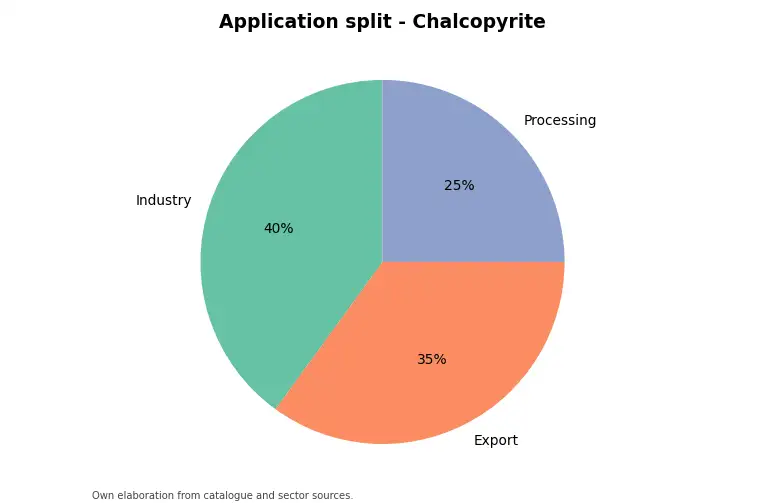
The applications of Chalcopyrite span steelmaking, smelting, construction. This versatility explains why Chalcopyrite is traded in formats as different as in bulk, raw, wholesale, granulated, per ton.
Quick sheet
- Main applications: steelmaking, smelting, construction
- Formula / composition: CuFeS2
- Documentation: Chalcopyrite Analysis, Chalcopyrite Certificate, Chalcopyrite with Certificate of Origin
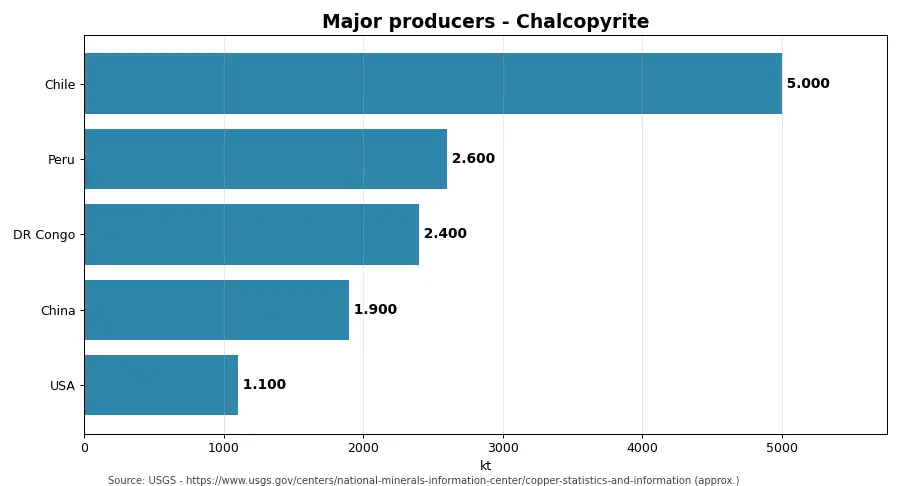
- Common origins: various origins
- Sector: Mining
- Presentations: in bulk, raw, wholesale, granulated, per ton
Sustainability and traceability
The end client now asks where it comes from Chalcopyrite.
Quality: the line between offer and deal
A serious supplier issues Chalcopyrite Analysis, Chalcopyrite Certificate, Chalcopyrite with Certificate of Origin with every lot. A rejection at destination costs more than an inspection on time.
Storage and handling
Check the data sheet of Chalcopyrite before stowing: humidity, compatibility and presentation matter.
Buying Chalcopyrite with method
Agree in writing the three pillars of the deal.
Trends and outlook
The buyer of 2026 compares online before signing.


Chalcopyrite: also known as
In the international market, Chalcopyrite is also known and traded under other names: depending on the country or the trade, it is common to find terms such as the following.
The difference is in the detail: Chalcopyrite Analysis, Chalcopyrite Certificate, Chalcopyrite with Certificate of Origin.
Related terms
Frequently asked questions
In what formats is Chalcopyrite traded?
Mainly: in bulk, raw, wholesale, granulated, per ton, depending on end use and transport.
Which Incoterm should I use for Chalcopyrite?
It depends on control and cost: FOB gives freight control; CIF simplifies; EXW maximises risk and margin.
Which origins stand out for Chalcopyrite?
Among others: various origins, according to the market.
Is pre-shipment inspection advisable?
Yes: an independent inspection protects payment and facilitates financing.
Professional criteria for trading Chalcopyrite
Demand for Chalcopyrite does not depend on a single sector: steelmaking, smelting, construction draw a consumption map that cushions cycles and supports buying interest all year. In practice this means recurring quotations, growing volumes and constant pressure for perfect documentation and on-time delivery.
The detail that makes the difference
The final cost of Chalcopyrite delivered is not understood without adding freight, insurance, stowage and presentation: in bulk, raw, wholesale, granulated, per ton. A well-planned container cuts the cost per ton more than any negotiated discount.
What separates a good deal from a bad one
The trade of Chalcopyrite connects origins such as various origins with destinations across Asia, Europe and America. Each market imposes its own requirements: registrations, labelling and quality standards.
Key market facts to know
Once at destination, Chalcopyrite requires storage conditions suited to its presentation: dry environment, segregation from incompatible goods and FIFO rotation. Losses from poor stowage are the most common and the easiest to prevent.
The detail that makes the difference
Choosing a supplier of Chalcopyrite should not be a lottery: review track record, supply capacity, current certificates and references from other buyers. A supplier that answers in 24-48 hours, accepts independent inspection and closes Incoterm, packaging and lead times in writing is worth more than a small discount.
Key market facts to know
Before closing a large volume of Chalcopyrite, request a sample and an independent laboratory analysis. The cost of that control is minimal compared with a rejection at destination.
Factors that weigh in the buying decision
The professionalisation of the mining sector has shortened decision cycles: digital sheets, answers within hours and PDF documentation are now the norm. Still, verification by inspection remains the best insurance.
Big picture: Chalcopyrite in the supply chain
Traceability and responsible origin are no longer an add-on but a requirement in many purchase specifications, especially in the European market. Documenting the route of Chalcopyrite opens doors and protects the reputation of both parties.
Beyond price: the real value of Chalcopyrite
Negotiating Chalcopyrite with data changes the conversation: knowing origins, presentations and required documentation allows comparing offers on equal terms and discarding out-of-market prices in both directions.
Professional criteria for trading Chalcopyrite
Documentation marks the line between a professional operation and a problem at customs: certificate of origin, recent analysis, packing list and bill of lading must match exactly. Any mismatch between papers and cargo can hold the container for weeks.
What separates a good deal from a bad one
Demand for Chalcopyrite does not depend on a single sector: steelmaking, smelting, construction draw a consumption map that cushions cycles and supports buying interest all year. In practice this means recurring quotations, growing volumes and constant pressure for perfect documentation and on-time delivery.
What separates a good deal from a bad one
The final cost of Chalcopyrite delivered is not understood without adding freight, insurance, stowage and presentation: in bulk, raw, wholesale, granulated, per ton. A well-planned container cuts the cost per ton more than any negotiated discount.
Conclusion
In short, Chalcopyrite combines an active market and broad applications. The difference is in the detail: Chalcopyrite Analysis, Chalcopyrite Certificate, Chalcopyrite with Certificate of Origin.